How the Program Works
CFES connects families and young people in ACS programs with support to strengthen their economic stability and mobility. At the core of the program is the young person or family's engagement with an ACS program—either through an ACS team like FSU/FPP or through an ACS provider. The following scenarios outline the alternative ways the four key parts the program can be achieved:
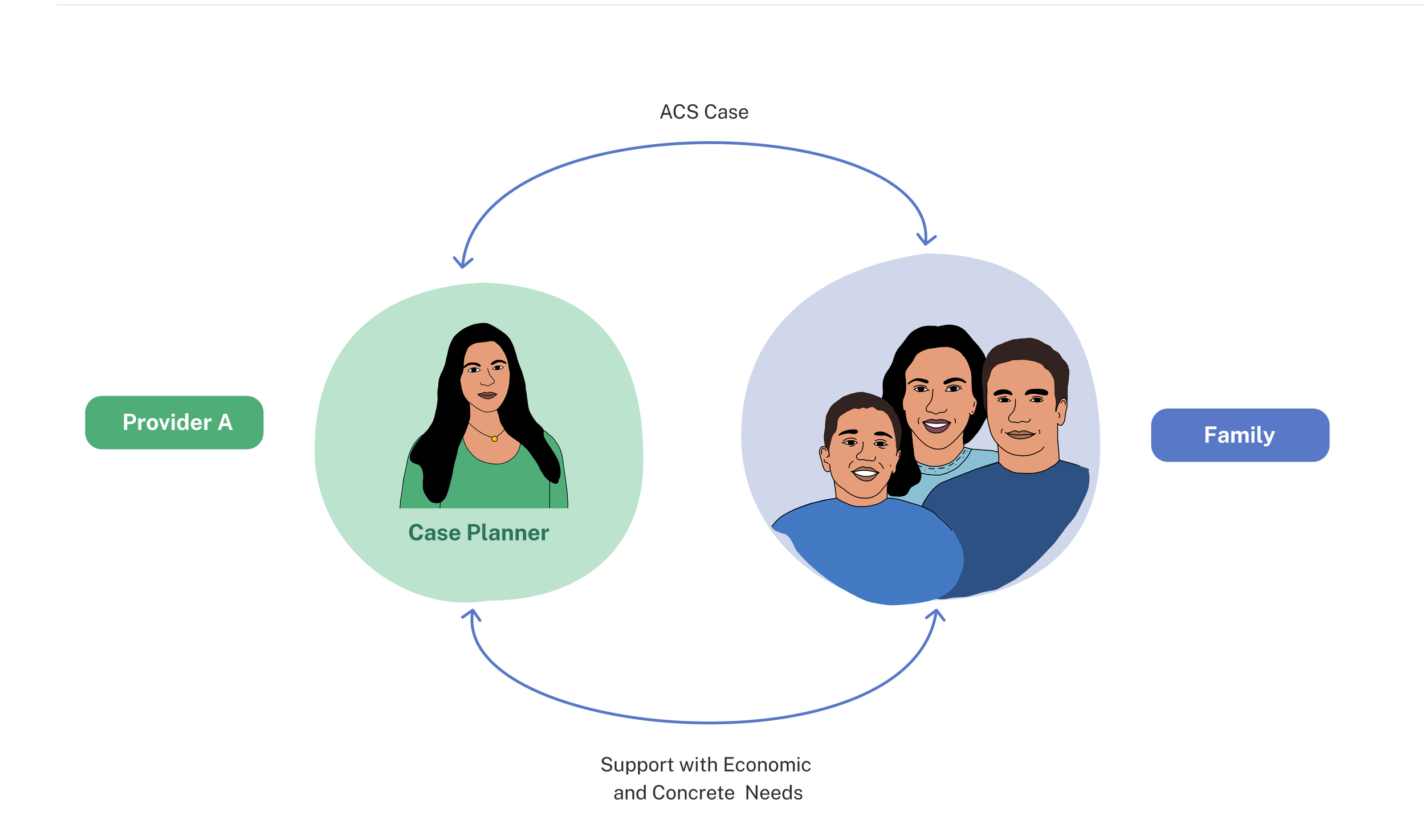
Scenario A: A Child Welfare Worker (Case Aide, Parent Advocate, Family Worker, etc.) acts as an Economic Resource Navigator.
Screen for needs. The program begins with screening for unmet Economic Security needs (see Phase 1). This might happen during intake or another early meeting with the Child Welfare Worker or Manager. Screening can be conducted by the primary Child Welfare Worker or by another role who will also act as an Economic Resource Navigator, such as a Case Aide, Parent Advocate, or Family Worker. Screen early, and re-screen at regular milestones throughout the child welfare case unless a referral is eventually made to a dedicated Economic Resource Navigator who is outside of the primary Child Welfare Worker or Manager.
[No referral is needed to Economic Resource Navigators, as they are part of the Child Welfare Worker or Manager and are already working with the family or young person.]
Economic Resource Navigators provide support. After the introductory meeting between the Child Welfare Worker, ERN (Case Aide, Parent Advocate, Family Worker, etc.), and family or young person, the ERN continues working with the family or young person to understand and address their Economic Security needs (see Part 3). The Child Welfare Worker manages the ACS case, and the ERN regularly checks in with them to align on Economic Security needs and progress toward addressing them.
Support continues after case closure. When the ACS case closes, the ERN can continue working with the family or young person on their Economic Security needs or determine if an external referral is needed for further Economic Security support (see Part 4).
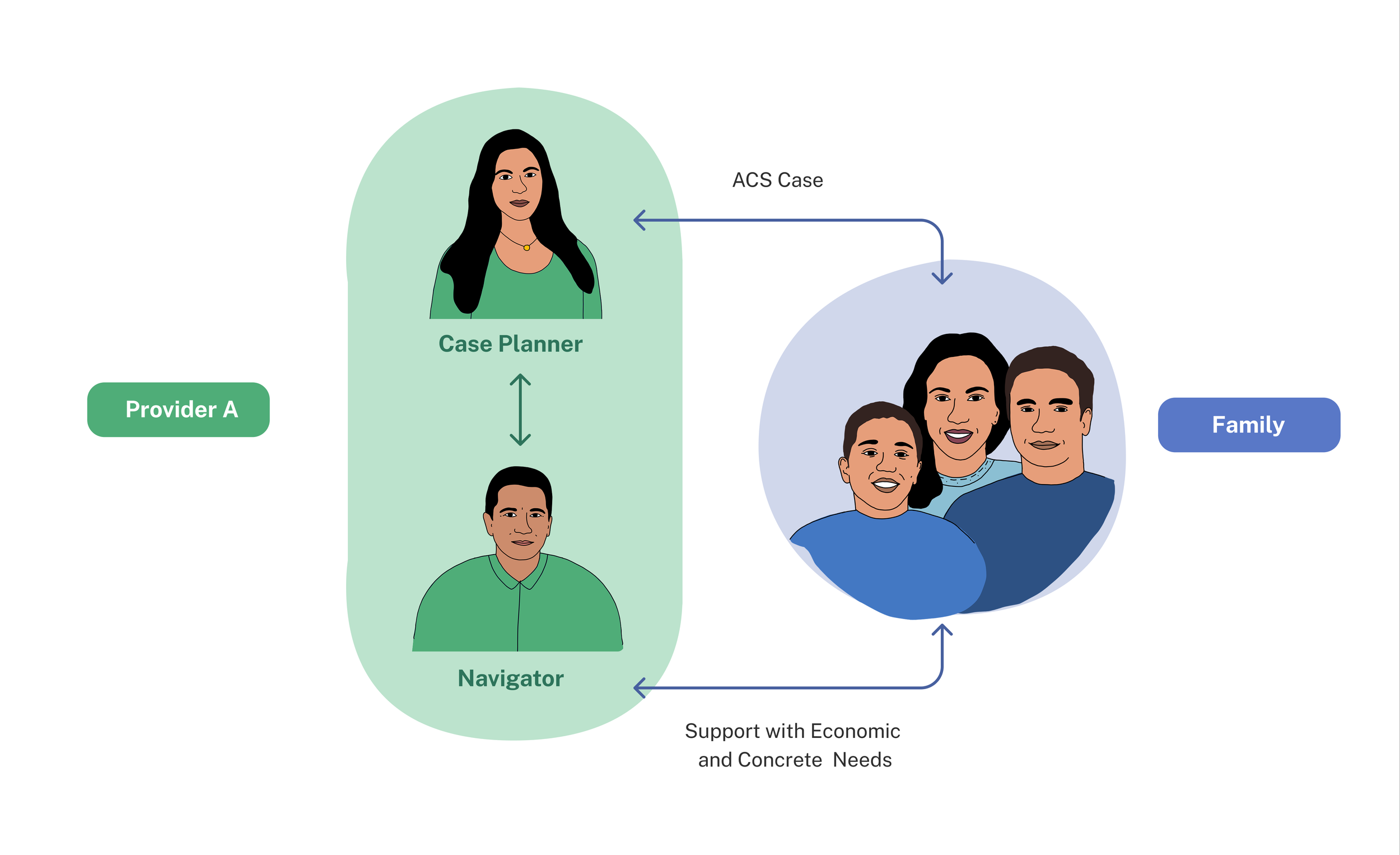
Scenario B: The Child Welfare Worker or Manager refers the family or young person to a dedicated in-house Economic Resource Navigator.
Screen for needs. The primary Child Welfare Worker screens for unmet Economic Security needs (see Part 1) during intake or another early meeting. They re-screen at regular milestones throughout the child welfare case until they make a referral to an ERN.
Refer to a dedicated in-house ERN. If the family or young person has Economic Security needs that require eligibility assessment, application support, or referral beyond the knowledge or expertise of the Child Welfare Worker, schedule a joint meeting with a dedicated ERN at the same organization (see Part 2). ERNs are staff whose dedicated capacity may be funded through future ACS or NYCBenefits contracts.
ERNs provide support. The ERN continues working with the family or young person to understand and address their Economic Security needs (see Part 3). The Child Welfare Worker manages the ACS case, and the ERN regularly checks in with them to align on Economic Security needs and progress toward addressing them.
Support continues after case closure. When the ACS case closes, the ERN can continue working with the family or young person on their Economic Security needs or determine if an external referral is needed for further Economic Security support (see Part 4).
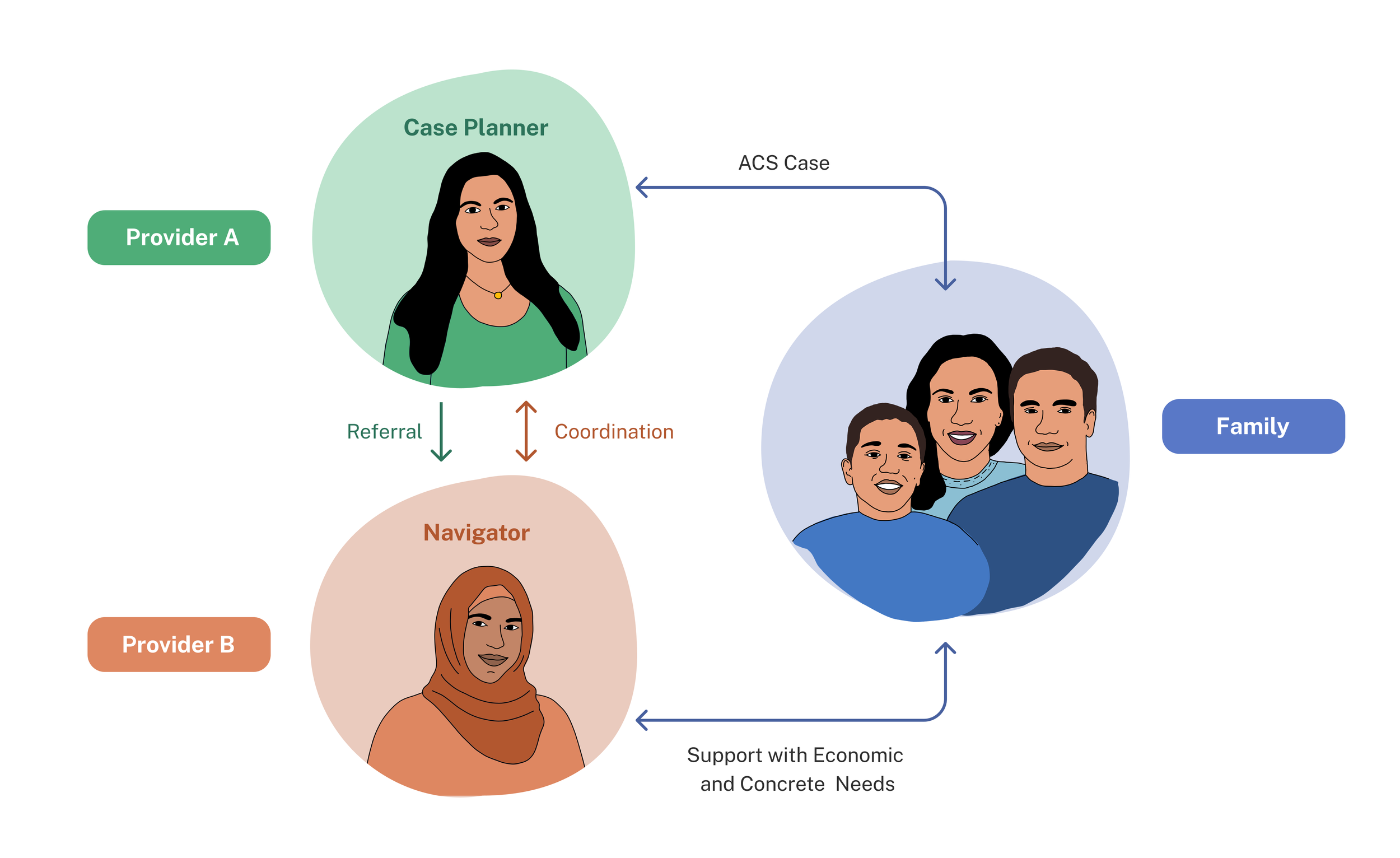
Scenario C: The Child Welfare Worker or Manager refers the family or young person to a dedicated Economic Resource Navigator at an external organization.
Some teams and organizations might not have an in-house ERN. Or the family or young person might prefer to work with an ERN at another organization based on location, reputation, cultural or language preferences, or a desire to keep their ACS case separate from their economic needs.
Screen for needs. The primary Child Welfare Worker screens for unmet Economic Security needs (see Part 1) during intake or another early meeting. They re-screen at regular milestones throughout the child welfare case until they make a referral to an ERN.
Refer to a dedicated ERN at an external organization. If the family or young person has Economic Security needs that require eligibility assessment, application support, or referral beyond the knowledge or expertise of the Child Welfare Worker—and there are no options for in-house Economic Security—first, explore capacity and fit for Economic Security at an external organization. When confirmed, submit a referral and coordinate a warm handoff (ideally, an in-person meeting with the family or young person making a phone call to the ERN).
ERNs provide support. The ERN continues working with the family or young person to understand and address their Economic Security needs (see Part 3). The Child Welfare Worker manages the ACS case, and the ERN regularly checks in with them to align on Economic Security needs and progress toward addressing them.
Support continues after case closure. When the ACS is nearing closure, the ERN provides final updates to the referring Child Welfare Worker. The ERN can continue working with the family or young person on their Economic Security needs or determine if an external referral is needed for further Economic Security support (see Part 4).